I recently returned from a two week trip to England. I was mostly there to visit family, but I also managed to carve out a little time for my research.
You may recall that most of my research subjects were deeply religious: William Forster Mitchell descended from a long line of Quakers on Nantucket. His daughter, Annie Maria Mitchell Payne, valued her family’s Quaker heritage but was a devout Episcopalian. Rev. Israel Perkins Warren and Jedidiah Morse were Congregationalist ministers. Rev. Richard Allen, David Walker, and Thomas Bywater Smithies were Methodists. Rev. Issac Brinckerhoff was a Baptist minister. Frances E. H. Haines was Presbyterian. All of these denominations have a connection to England, so I used my visit to explore that heritage.
The First Sunday
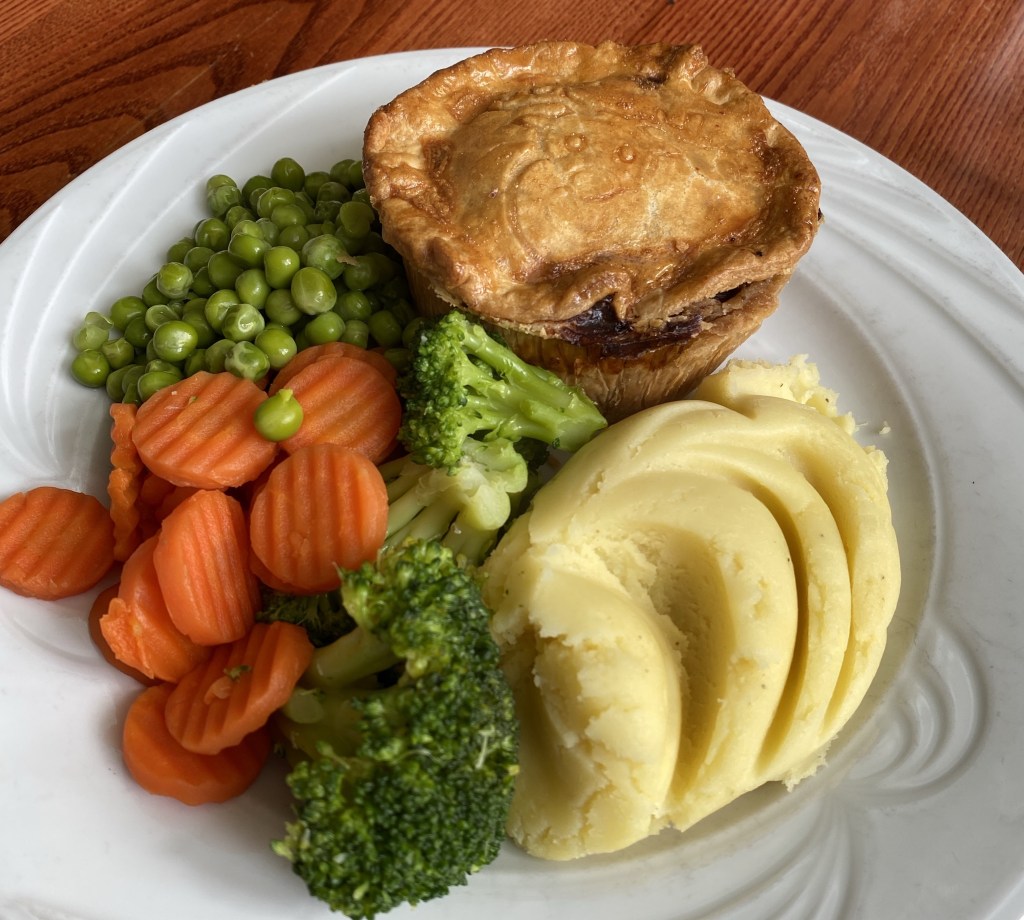
For the first half of my time in England, I was visiting family in the Midlands. We travelled to an assortment of picturesque small towns known for their excellent cheeses and delectable savory pies.
While approaching each town you are immediately struck by the sight of a towering gothic church, usually belonging to the Church of England. Attendance used to be compulsory so every town has at least one.
Since almost every Christian church meets at the same time on Sundays, I was limited to attending a single service. Nevertheless, I managed to view the exterior of a few different buildings in the small town of Oakham.
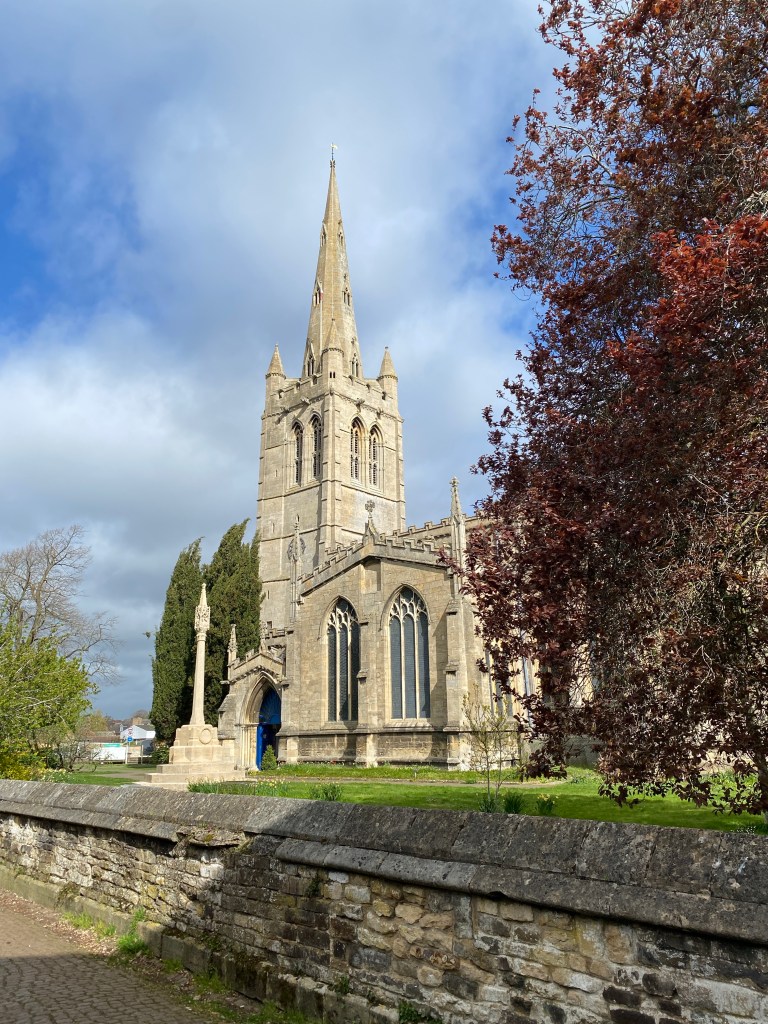
My first stop was All Saints Church. The oldest parts of the church were built around the year 1200 so people have been worshipping on this spot for over 800 years. The sound of the manual bell ringing was delightful. I only had a few minutes to step inside but I can attest to its beauty. A very gracious older woman greeted me and made me feel quite welcome. If I had time, I would have loved to stay, but I had already decided to go to another house of worship.
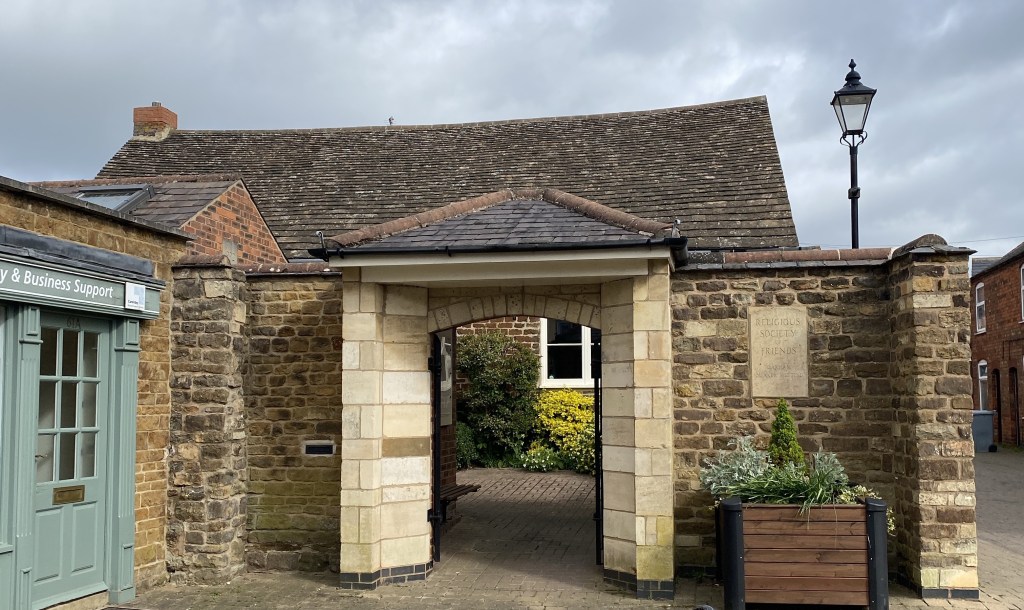
The Oakham Quaker Meeting House was just a short walk down the street. It’s a modest stone building built in 1719 but Friends have been gathering in the town since 1676. I received a very warm welcome and felt quite at home. With time, about 20-25 people gathered for a traditional unprogrammed worship service. We mostly sat in silence but three people spoke briefly. One lady felt moved to read something aloud from the Advices and Queries written in Quaker Faith and Practice.
33. Are you alert to practices here and throughout the world which discriminate against people on the basis of who or what they are or because of their beliefs? Bear witness to the humanity of all people, including those who break society’s conventions or its laws. Try to discern new growing points in social and economic life. Seek to understand the causes of injustice, social unrest and fear. Are you working to bring about a just and compassionate society which allows everyone to develop their capacities and fosters the desire to serve?
After the service, I briefly chatted with some of the Friends including an American woman, a Canadian woman, and a couple from South Africa. There was quite a diverse assortment in that small meeting house. A special event was scheduled right after the meeting for worship so I didn’t stay very long.
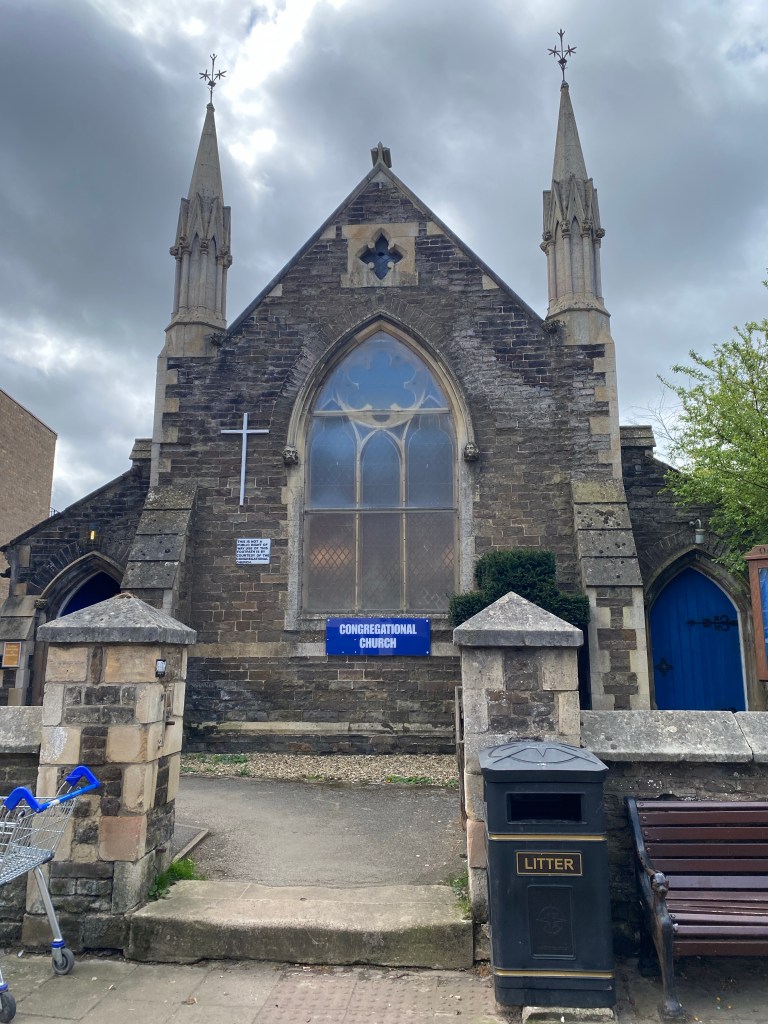
My last stop was the Oakham Congregational Church. They were in the middle of worship when I walked past, so I did not go inside. But I learned via their website that there has been a Congregational meeting in Oakham since 1662, the same year as the Act of Uniformity. I haven’t been able to find out much about this specific congregation in its early years, but I did find some interesting books about the history of non-conformity in the region.
You may recall that the Mayflower Pilgrims began as a separatist congregation in Scrooby. That’s about 100 km north of Oakham. I knew that there were other separatists in England, but never thought much about what happened to them. Now I know that at least some of them are Congregational churches. I suspect this will be an interesting rabbit hole to explore another day.
The Second Sunday
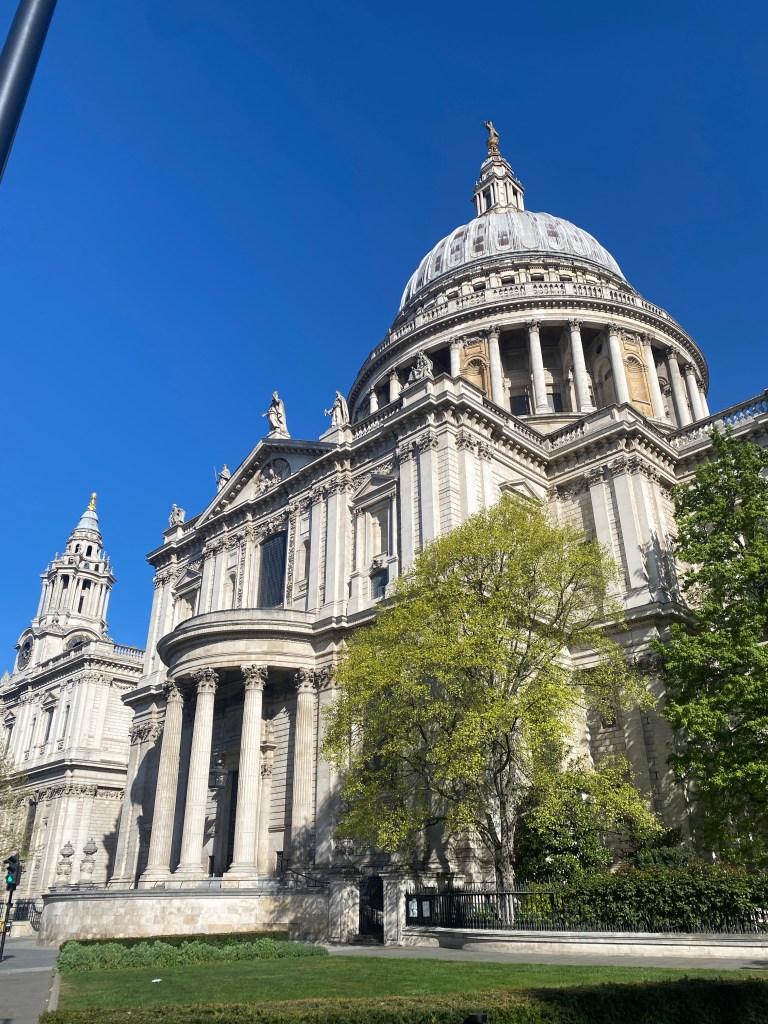
I began the day with an 8:45 am morning prayer service at St. Paul’s Cathedral. The current structure was built in 1710 after the great fire of London. The church is visually breathtaking. I sat beneath the vast dome during the service. Reverend Canon Dr Catherine Okoronkwo’s voice echoed beautifully through the halls. I believe The Reverend Canon Philip Banks was serving alongside her. The service was quite short, but meditative. It was a lovely way to begin the day.
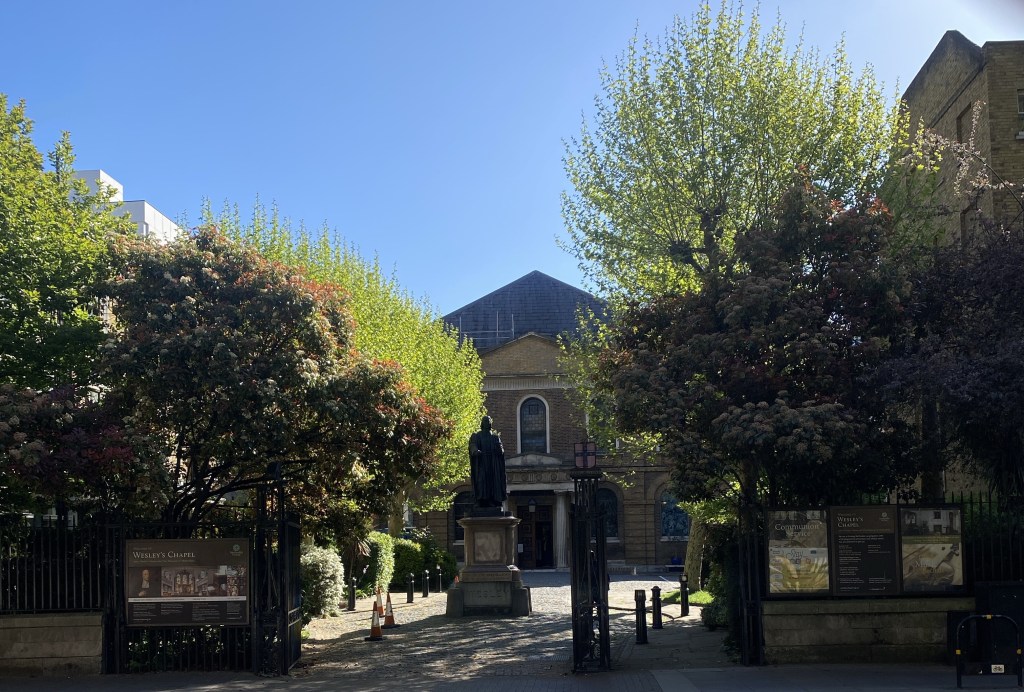
Next I made my way to Wesley’s Chapel which is considered to be the “Mother Church of World Methodism.” I had previously visited the Museum of Methodism and John Wesley’s House. But I also wanted to experience the location as its primary purpose as a house of worship. Due to time constraints, I attended the 9:45 communion service in the small Foundery Chapel on the side of the main sanctuary. I must confess, I expected this to be boring. I only attended because I wanted to understand the history of Methodism. Much to my surprise, it was engaging and moving.
Revd Canon Dr Jennifer H Smith led the service. There were only about a dozen folks in attendance so it felt quite intimate. Everyone joined together to sing hymn 306, “Now the green blade riseth, from the buried grain.” An elderly gentleman played a small organ that belonged to Charles Wesley Jr. A guest minister named Emma gave a short but incisive sermon on the road to Emmaus. It was really lovely.
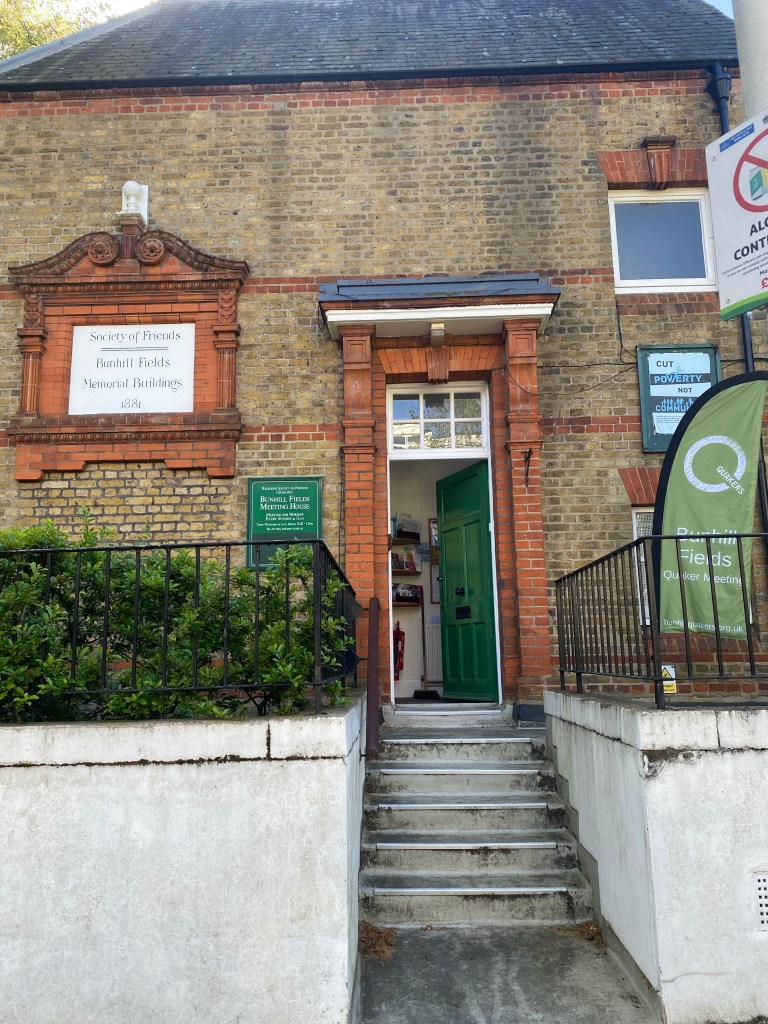
My last stop was the Bunhill Fields Quaker Meeting. They occupy an old caretaker’s house next to the Quaker burial ground, where George Fox is buried. There used to be a purpose built meeting house on the property, but it was destroyed during WWII. The meeting I attended was completely silent from beginning to end, but I was nevertheless quite moved. The fellowship afterwards was very warm and I really enjoyed chatting with folks about my research. I am so extraordinarily grateful for the opportunity to visit so many historic sites.
Stay tuned for more updates about the research I did in England.