This is part of a series of articles about obscure 19th century authors. I hope to revise and expand them over time. This post was first published on June 21, 2026 and updated on June 23, 2026.
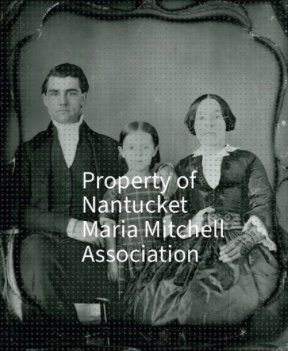
and Charlotte Dow Mitchell.
Image courtesy of the Maria Mitchell Association.
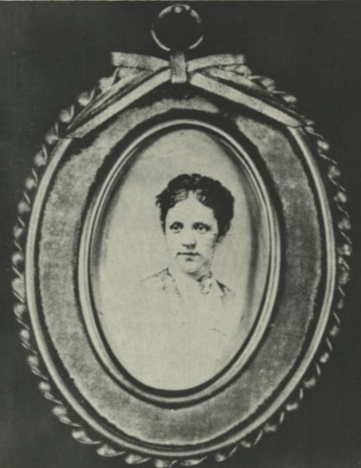
Anne Maria Mitchell was born on April 13, 1847 in Sandwich, Massachusetts.2 Her family was a little unusual for the time. Her father, William Forster Mitchell, was a Quaker. But her mother, Charlotte Coffin Dow Mitchell, was Episcopalian. Anne Maria’s personal letters reveal that while she appreciated both traditions, she considered herself a devout Episcopalian.3 She was also the niece and partial namesake of Maria Mitchell, the famous astronomer, a remarkable woman in her own right.4 She spent most of her childhood in Philadelphia, Pennsylvania and likely attended St. Mark’s Episcopal Church. 5 As I mentioned in my previous post, her father was a devoted educator and humanitarian from Nantucket. So she interacted with diverse assortment of people, including black activists in Nantucket and Philadelphia, wealthy parishioners at St. Mark’s, different sects of the Quaker community, abolitionists, middle class students of her father, poor black students at the Bethany Mission, and much more.
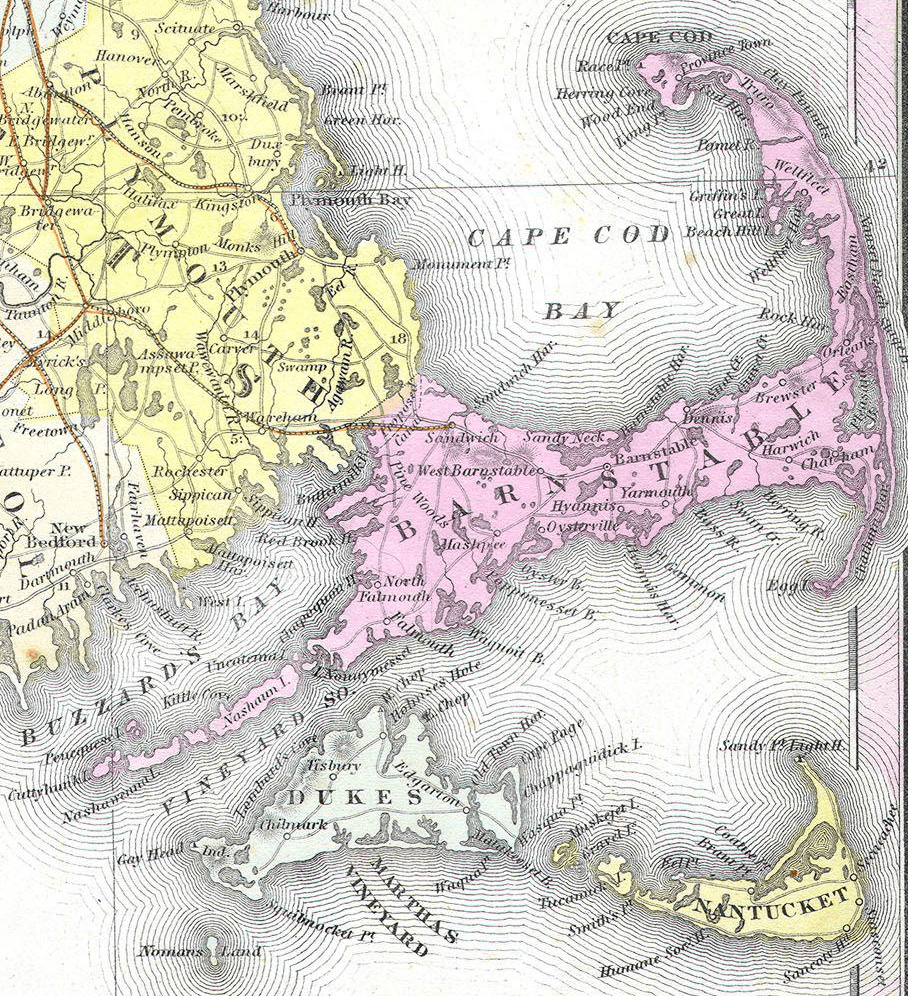
Her literary talents were recognized while she was still in high school. A few short pieces were published in a newspaper in Nantucket in the 1860s.7 Her educational progress so impressed her grandfather, William Mitchell, that he wrote the following to his brother Peleg: “Anne Maria has entered public school and is creating quite a sensation by her composition; a chip, I say, with a congratulatory grin.”8 In 1864, her dad went to Tennessee to found schools for formerly enslaved people. She moved to Lynn, Massachusetts with her mother and finished high school there.9
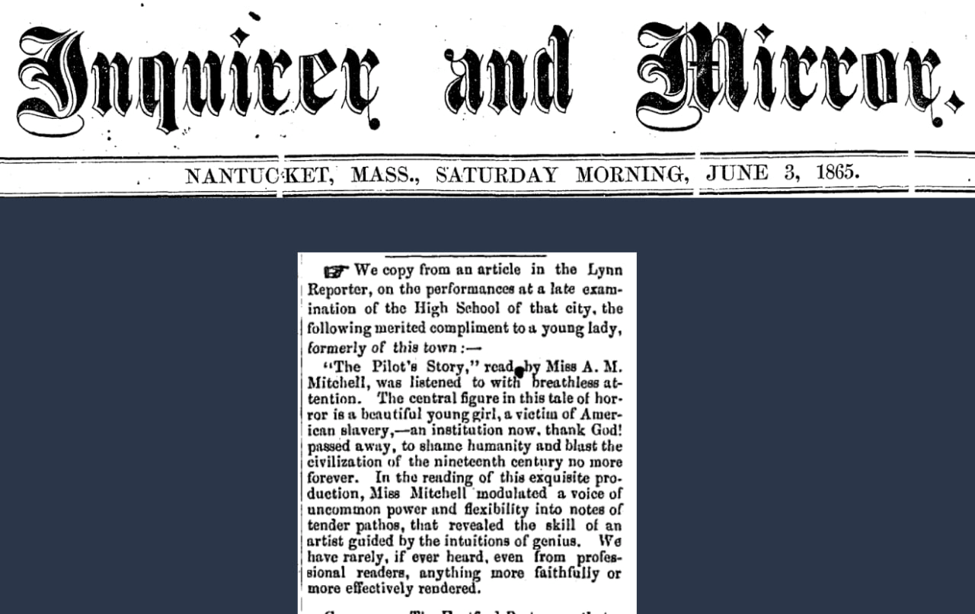
For her senior examinations, she performed an original composition about an enslaved woman’s escape to freedom. It received high praise in the local papers: “We have rarely, if ever heard, even from professional readers, anything more faithfully or more effectively rendered.”10
Later that year, when she was just 18 years old, she began teaching formerly enslaved people in Tennessee and Alabama. The Civil War had ended mere months before her arrival in Nashville and much of the South was still in shambles.11 Her father had been working diligently in the region for a year before her arrival, but there was still much to do. He was a school superintendent, but also attended to the desperate material needs of the refugees. Anne Maria taught under him and helped distribute critical aid to the community. Her father remarked in a letter to supporters that: “The presence of female teachers among the freed people in this department, has saved hundreds of lives.”12 Their hard work paid off. Within just two years, the camp improved significantly, and Anne Maria was leading a teacher training class.13
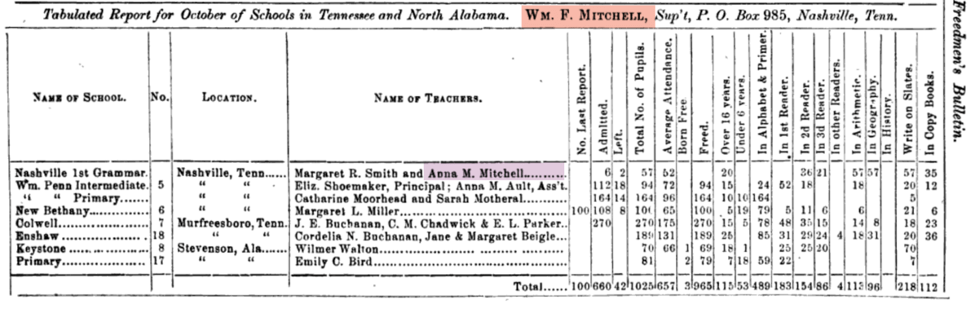
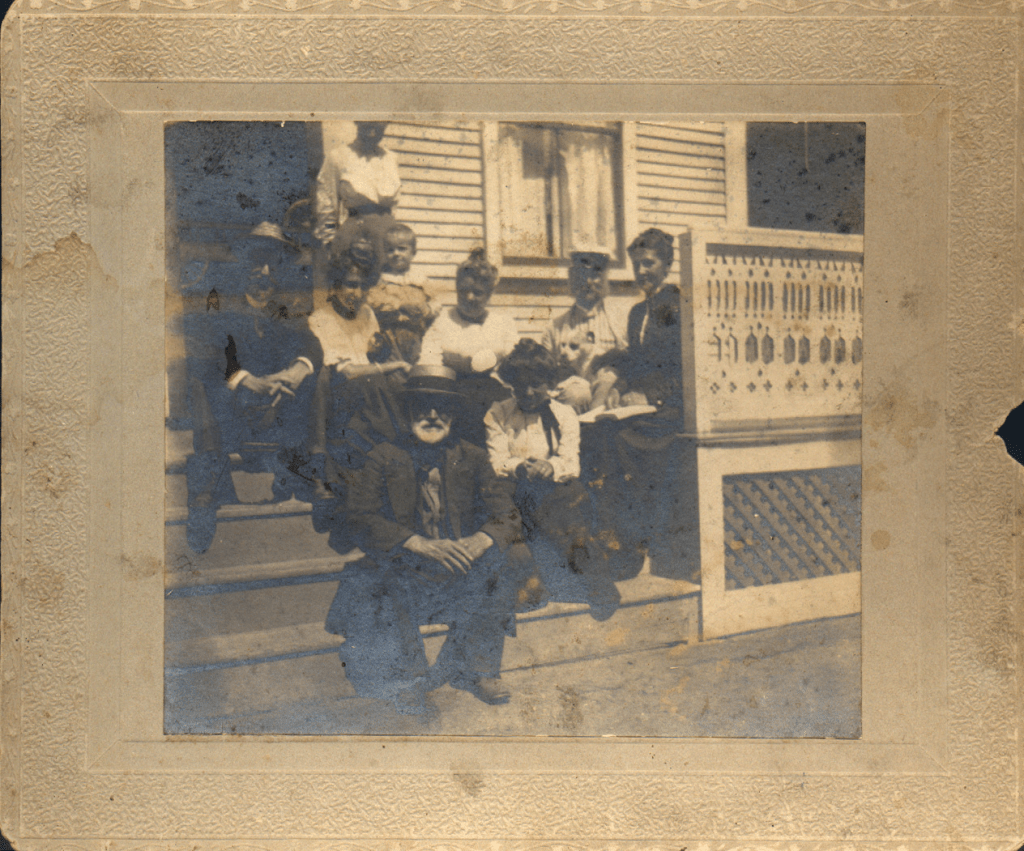
I have highlighted Mitchell and her father.
The Mitchell family left Tennessee in 1867 and Anne Maria began her literary career shortly thereafter. Many of her books and short stories drew upon her rich personal experiences. Like most children’s literature from this era, her books depict children learning to be good Christians and virtuous citizens.

Her first two books were based on her experience teaching in the south. Martha’s Gift: A Story for the Freedchildren and Freed Boy in Alabama were works of fiction published in 1868 and 1869 respectively. The titular characters are formerly enslaved children that attend school and grow their Christian faith. Both books are set in northern Alabama and realistically depict the life of black children during reconstruction. She also wrote two educational books that feature black students: The Golden Primer and The Golden First Reader.
Paul Kent, the Choir Boy is about a young boy that serves in a large Episcopal church. The book follows him as he strives to understand his Christian faith and the liturgical traditions of the Episcopal church.15 Mitchell’s love of the Episcopal church is palpable; this book was clearly near and dear to her heart.
In 1869, she published a few short stories in the Herald of Peace. It was a Quaker publication dedicated to the cause of peace. Her father contributed some articles as well. “Eddie’s Cup of Cold Water” is based on one of the leisure trips her father organized for poor and disabled children.16 This was a passion project for him. According to his brother, William F. Mitchell believed that “you can’t be healthy and it’s hard to be good if you never have fun.”17
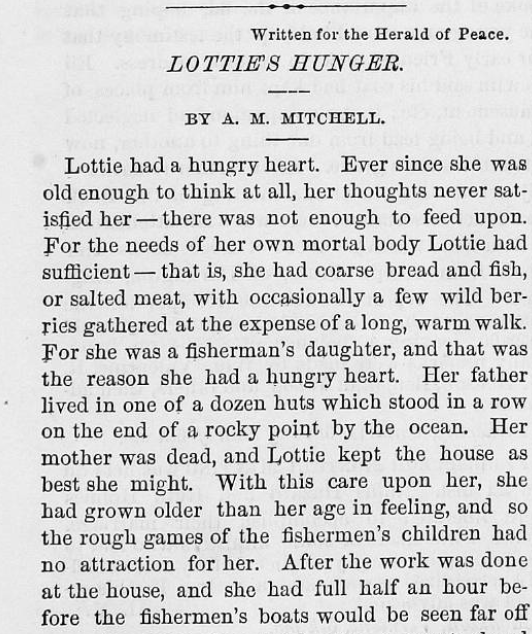
“Lottie’s Hunger” was published on August 8, 1869.18 The story is about a curious girl who is a fisherman’s daughter. The descriptions of shore dotted with simple huts is very reminiscent of rural life on Nantucket and Cape Cod.
She also published a collection of short stories titled: Crystals. It contains fascinating glimpses into the lives of ordinary children. There are stories about a factory worker, an aspiring painter, a rich girl with a maid, an artist, a young clerk, and more. One particularly interesting story is set on a Nantucket light ship.19 The collection also includes a humorous poem by her aunt, Maria Mitchell.20
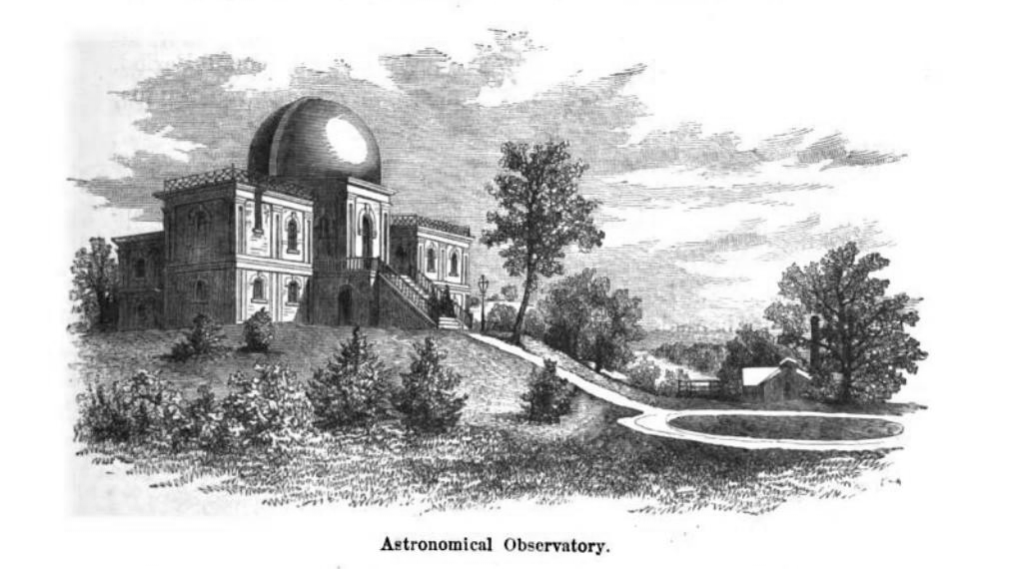
Anne Maria Mitchell attended Vassar for the 1870-1871 school year.21 Unlike most students, she had the unique experience of living in the observatory with her aunt and namesake Maria Mitchell.22 She was not pursuing a degree, merely taking special courses. I haven’t been able to determine what specifically she studied, but the registrar at Vassar indicated that special courses typically indicated music.23
After she left Vassar, she published another children’s book: The Cash Boy’s Trust. It’s a rather Dickensian story about an orphaned store clerk that struggles to care for his sister and navigate urban life. The book received a positive review from Rev. Phebe A Hanaford, a family friend and Universalist minister.24
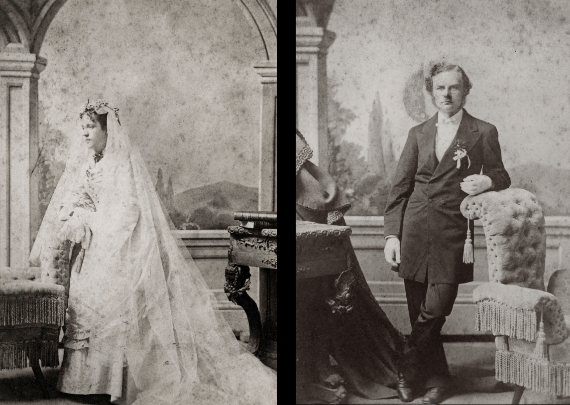
Images courtesy of the Wolfe family
She married an English engineer named Alfred Rickman Payne on August 29, 1872 at St. Stephen’s Episcopal Church in Lynn, Massachusetts. They settled there and started a family together.25
A few books were published early in her marriage. Rhoda’s Corner is about a wealthy girl who devotes herself to a life of service to others. She compiled an assortment of short stories from popular periodicals which were simply titled: Book of 190 Stories. The Forest Crossing is set in a Canadian logging camp.26 The Odd One is about an ordinary girl that slowly finds her place in life via service to others. Mrs. Payne (née Mitchell) had an infant at home when it was published in 1876 and then there is a gap in her writing. That time period was full of changes. Fannie Ursula Payne was born in 1875. Alice Mary Payne followed in 1877. The family moved from Lynn, Massachusetts to Cincinnati, Ohio in 1879.
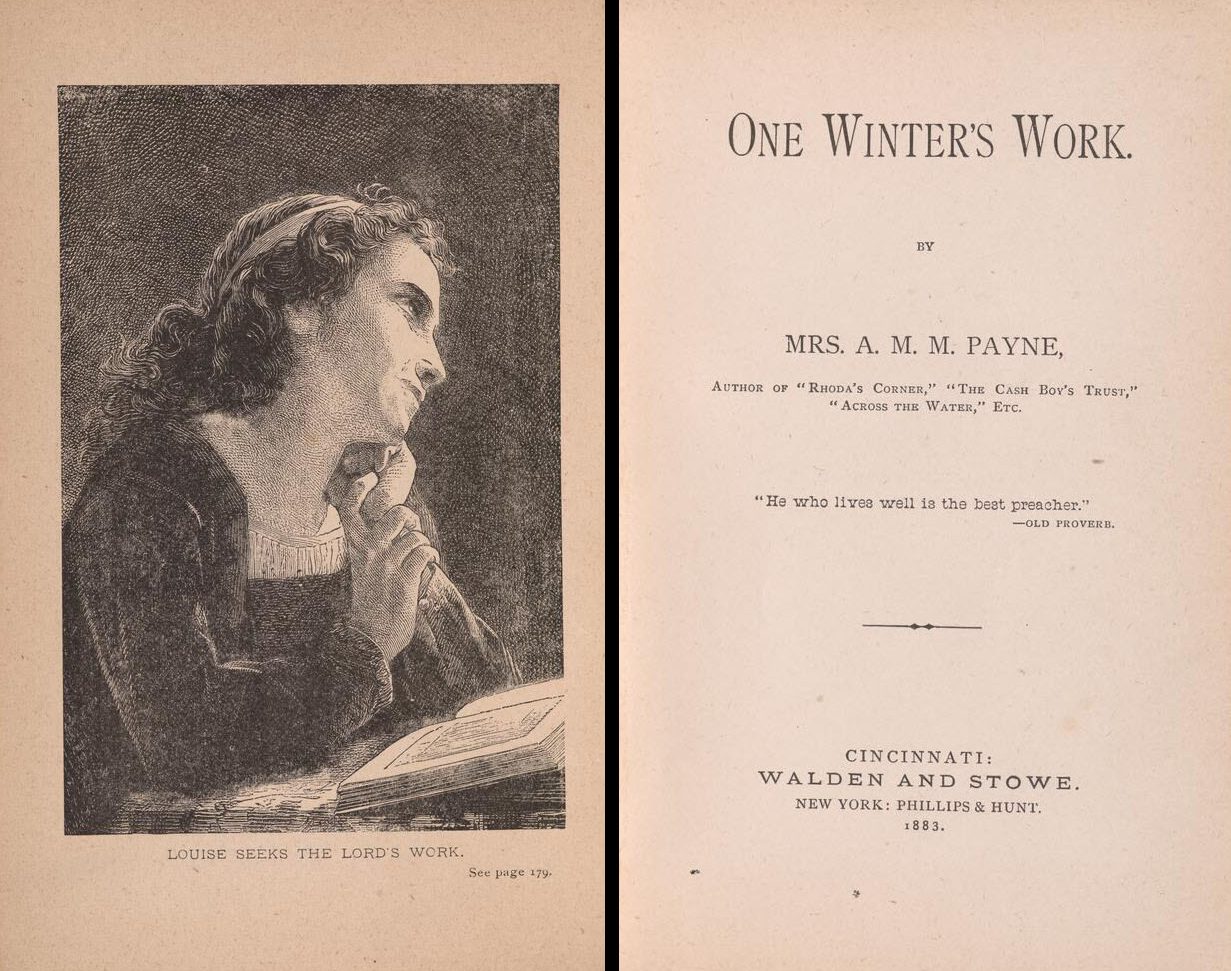
I’m not sure what inspired Mrs. Payne to write again; perhaps it was the change of scenery. Whatever the reason, she published a novel for adults in 1881: Outside the Walls. It’s a dramatic novel that begins with a man finishing a years long prison sentence in solitary confinement. It follows him as he attempts to make amends for his financial crime and find his place in society. In 1882, her last child, Katherine Eliza, was born and she published another novel, Across the Water. This remarkable book is set in Cincinnati, Ohio and centers on a family that emigrates from England.
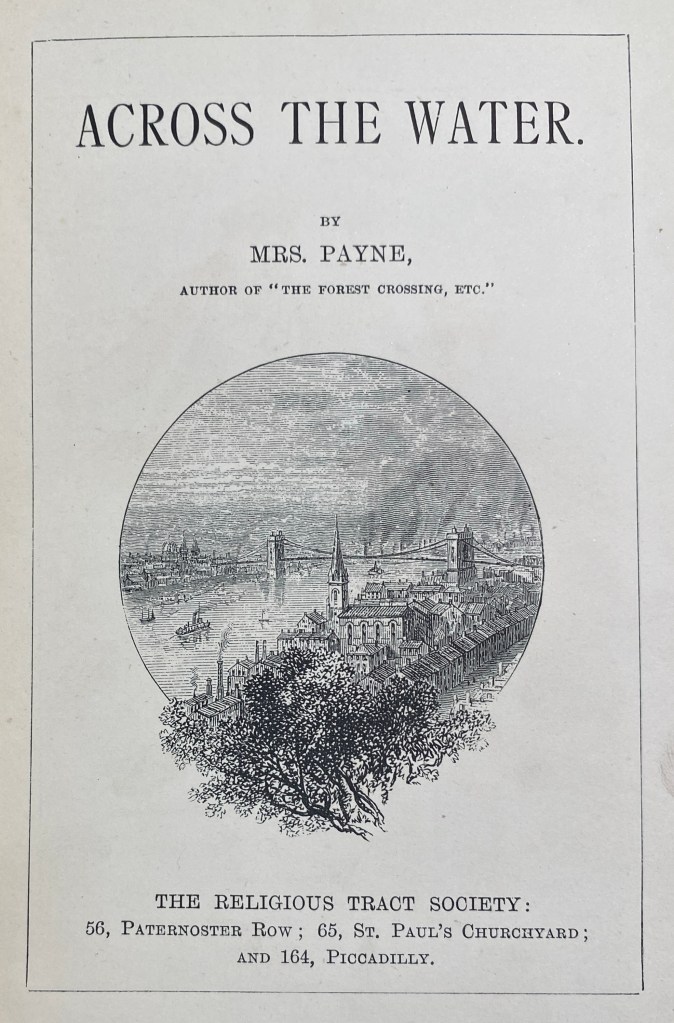
The engraving depicts the Roebling suspension bridge in Cincinnati, Ohio.
Her last novel, One Winter’s Work, is about the wife of engineer who works to connect with local factory workers. While the city is not specified, it also appears to be based on her own life. One of the big projects of the protagonist is creating a wholesome community space where all sorts of people can gather together. She really did that in Cincinnati and published an article in The Christian Union to encourage others to do the same.27
For most of their time in Cincinnati, the Payne family lived in the neighborhood of Price Hill. They were founding members of a small Episcopal mission church that eventually became Church of the Nativity. Alfred was the Sunday-school superintendent for a time and represented the church at diocesan convention in 1885 and 1887. 28 They left Cincinnati a year or two later and moved one last time to Brooklyn, New York.
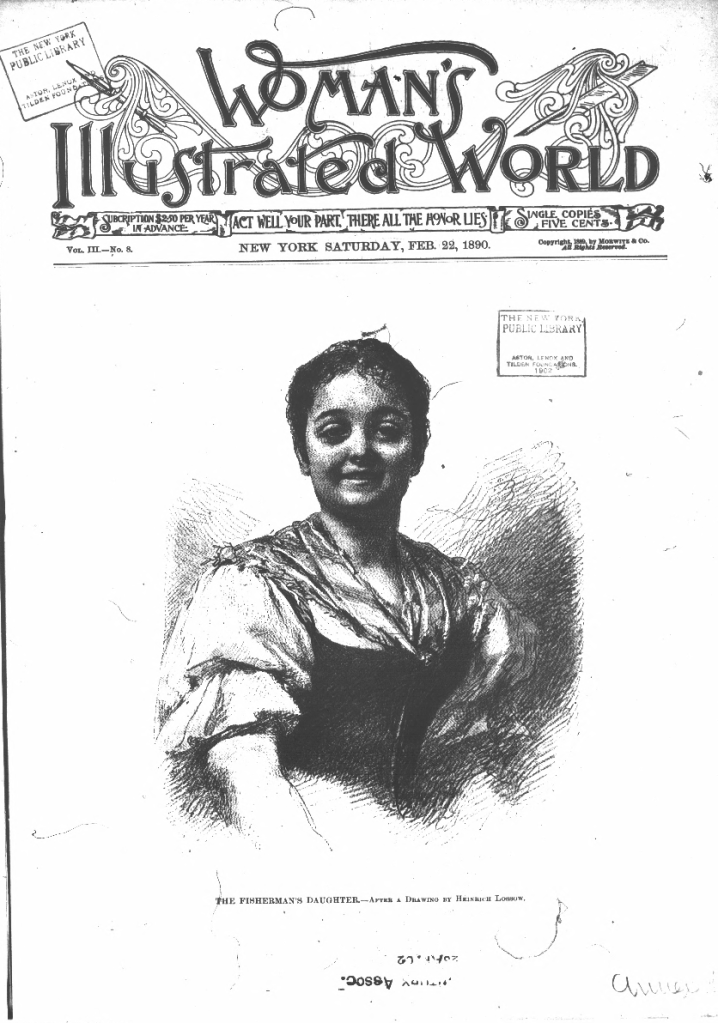
Mrs. Payne still wrote at least occasionally. When her aunt and namesake died in June 1889, and she wrote an obituary for the New York Daily Graphic.30 She also contributed to The Writer and Woman’s Illustrated World.31 She was an associate editor for the latter around 1889.32 While living in Brooklyn, she was a founding member of St. Gabriel’s Episcopal Church.33 For many years, she was a devoted Sunday-school teacher and organist. She died in Brooklyn, New York in 1929 at the age of 82.34
While she is virtually unknown now, I don’t think she would mind. Like her father, she devoted her life to uplifting others; she never sought fame or recognition. When I think about her legacy, my mind is drawn back to one of her early short stories titled: No leaf moves but God wills it.35 It’s about a young clerk that is inspired to sing a hymn on a ferry ride from New York to Jersey City. The boy doesn’t think much about it, but the story chronicles how he unknowing impacted many fellow travelers. Two young buskers find peace while resting that night in a hay field. A produce seller has a disappointing day at the market but thinking upon the hymn brings a lovely memory of his own mother’s singing. He decides to sing on his way home and in so doing relieves the anxiety of his wife who had stayed up late awaiting his return. A poor girl hears the hymn on her way to work. It sustains her through the day and when she returns home, sings it to comfort her dying sister. Anne Maria Mitchell Payne left just such a legacy. The impact of her work continues to echo through the generations in ways we cannot grasp. I hope it moves you to do something beautiful. I know it has moved me.
I hope you have enjoyed reading about this remarkable woman. My next post will be about the many research trips I took to learn about this incredible family.
Bibliography of Anne Maria Mitchell Payne
Books
| Title | Publisher | Year |
| Martha’s Gift. A Story for the Freedchildren. | American Sunday School Union | 1868 |
| Freed Boy in Alabama | Presbyterian Publication Committee | 1869 |
| Paul Kent, the Choir Boy | Richard McCauley | 1869 |
| Golden Primer | Presbyterian Publication Committee | 1869 |
| Golden Reader | Presbyterian Publication Committee | 1870 |
| Crystals | Presbyterian Publication Committee | 1870 |
| The Cash Boy’s Trust | Robert Carter & Bros | 1872 |
| Rhoda’s Corner | Robert Carter & Bros / Herrick | 1873 |
| Book of 190 Stories | American Sunday School Union | 1874 |
| The Forest Crossing | London Religious Tract Society | 1875 |
| The Odd One | John F. Shaw and Company | 1876 |
| Outside the Walls | Robert Carter & Bros / Herrick | 1881 |
| Across the Water | London Religious Tract Society | 1882 |
| One Winter’s Work | Robert Carter & Bros / Methodist Book | 1883 |
Periodicals
| Title | Location |
| Nantucket Inquirer | Nantucket, MA |
| Herald of Peace | Chicago, IL |
| Peterson’s Magazine | Philadelphia, PA |
| Christian Union | New York, NY |
| Woman’s Illustrated World | New York, NY |
| The National Review | London, UK |
| The Writer | Boston, MA |
Footnotes
- Alice P. Amey, “Letters of Annie Maria Mitchell,” Historic Nantucket 9, no. 3 (January 1962): 24. https://issuu.com/nantuckethistoricalassociation/docs/historicnantucket_1962january ↩︎
- Much of this article was recycled from a paper titled: “Reconstructing the Black Community” which I wrote for the 2024 Children’s Literature Association Conference in Madison, WI. ↩︎
- Amey, Alice Payne. “Letters of Anne Maria Mitchell,” Historic Nantucket, August 1961, pp. 86-87.
https://issuu.com/nantuckethistoricalassociation/docs/historicnantucket_1961july ↩︎ - I have built a family tree on ancestry, you can access it here:
https://www.ancestry.com/family-tree/tree/194487430/family?cfpid=282538121453&fpid=282538121454
Additionally, there is a family tree within the finding aid for Mitchell Family Papers at the Maria Mitchell Association:
https://www.mariamitchell.org/archives-special-collections. ↩︎ - Her second novel, Paul Kent the Choir Boy, was clearly set in St. Mark’s Church so I assume this is when she attended the church. For more information about Paul Kent, see my previous post: https://losthistorybooks.com/2026/06/09/paul-kent-the-choir-boy-and-other-episcopalian-books/ ↩︎
- Mitchell, Samuel A. Map of Massachusetts and Rhode Island. 1850. https://commons.wikimedia.org/wiki/File:1850_Cowperthwait_-_Mitchell_Map_of_Massachusetts_and_Rhode_Island_-_Geographicus_-_MA-m-50.jpg. ↩︎
- There are a few short stories, riddles, and poems published in the Nantucket Inquirer 1863-1864. They are only signed A.M.M. but I think it is her. She published an article in the same paper in 1866 and it was signed the same way.
Mitchell, Anne M. “A Riddle.” Nantucket Inquirer, March 25, 1863. https://nantucketatheneum.veridiansoftware.com/?a=d&d=NIR18630325-01.2.11&srpos=2&e=–1863—1865–en-20–1-byDA-txt-txIN-%22A.+M.+M.%22——.
Mitchell, Anne M. “A Riddle.” Nantucket Inquirer, July 20, 1864. https://nantucketatheneum.veridiansoftware.com/?a=d&d=NIR18640720-01.2.13&srpos=5&e=–1863—1865–en-20–1-byDA-txt-txIN-Riddle——.
Mitchell, Anne M. “Answer To Riddle.” Nantucket Inquirer, April 1, 1863. https://nantucketatheneum.veridiansoftware.com/?a=d&d=NIR18630401-01.2.9&srpos=43&e=–1863—1865–en-20–41-byDA-txt-txIN-answer——.
Mitchell, Anne M. “Correspondence.” Nantucket Inquirer, February 17, 1866. https://nantucketatheneum.veridiansoftware.com/?a=d&d=NIRM18660217-01.2.11&srpos=1&e=17-02-1866-17-02-1866–en-20–1-byDA-txt-txIN——-.
Mitchell, Anne M. “Hope. A Story for Children.” Nantucket Inquirer, May 20, 1863. https://nantucketatheneum.veridiansoftware.com/?a=d&d=NIR18630520-01.2.6&srpos=1&e=–1863—1865–en-20–1-byDA-txt-txIN-%22Hope.+A+Story+for+Children.%22——. ↩︎ - Qtd in Elizabeth F. Yager, “Biography of William Forster Mitchell,” p. 7. Elizabeth F. Yager Collection, NHA. ↩︎
- A letter written to her cousin Matthew Barney discusses the move and her dad’s activities helping formerly enslaved people in Tennessee
Amey, Alice Payne. “Letters of Anne Maria Mitchell,” Historic Nantucket, August 1961, pp. 84-86
https://issuu.com/nantuckethistoricalassociation/docs/historicnantucket_1961july ↩︎ - “We Copy from an Article in the Lynn…,” Nantucket Inquirer, June 3, 1865. ↩︎
- Qtd in Alice P. Amey, “Letters of Annie Maria Mitchell Continued from the July 1961 Issue,” Historic Nantucket 9 (October 1961): 135-136. https://issuu.com/nantuckethistoricalassociation/docs/historicnantucket_1961october ↩︎
- William F. Mitchell, “Nashville, 1 Mo 24th, 1866,” The Freedman’s Friend, February 1866. ↩︎
- William F. Mitchell, “Interesting Report of Our Schools in Nashville District,” Pennsylvania Freedmen’s Bulletin, May 1867.
https://www.google.com/books/edition/The_Pennsylvania_Freedmen_s_Bulletin/3Zw8AAAAYAAJ?hl=en&gbpv=1&pg=RA2-PA208-IA7&printsec=frontcover ↩︎ - Mitchell, William F. “Tabulated Report for October.” Pennsylvania Freedmen’s Bulletin, December 1865, 78. ↩︎
- For more information about Paul Kent, see my previous post: https://losthistorybooks.com/2026/06/09/paul-kent-the-choir-boy-and-other-episcopalian-books/ ↩︎
- Mitchell, Anne M. “Eddie’s Cup of Cold Water,” Herald of Peace. June 15, 1869. p. 134. ↩︎
- Qtd in Elizabeth F. Yager, “Biography of William Forster Mitchell,” p. 22. Elizabeth F. Yager Collection, NHA.
For information about the leisure trips her father organized, see the following reports and articles:
Mitchell, William F. Second Annual Report for the Union City Mission. Cincinnati, 1881.
Mitchell, William F. Third Annual Report for the Union City Mission. Cincinnati, 1882.
The Cincinnati Daily Star (Cincinnati). “Minor Local Mentions.” August 9, 1879. https://www.newspapers.com/article/the-cincinnati-daily-star-minor-local-me/200189690/.
The Cincinnati Enquirer (Cincinnati). “Union City Mission.” May 12, 1880. https://www.newspapers.com/article/the-cincinnati-enquirer-union-city-missi/162449171/.
The Cincinnati Enquirer (Cincinnati). “Union City Mission. The Second Annual Report.” May 11, 1881. https://www.newspapers.com/article/the-cincinnati-enquirer-the-union-city-m/200192526/.
The Cincinnati Enquirer (Cincinnati). “Invalids’ Picnic.” July 26, 1883. https://www.newspapers.com/article/the-cincinnati-enquirer-the-invalids-pi/141930417/. ↩︎ - Mitchell, Anne M. “Lottie’s Hunger,” Herald of Peace. August 1, 1869. p. 14. ↩︎
- This short story is titled “Cheer Up, God is Where he Was”
Mitchell, Anne M. Crystals. Presbyterian Board of Publication, 1870. Princeton Theological Seminary. https://archive.org/details/crystals00mitc. ↩︎ - This short story is titled “Circumstances Alter Cases”
Mitchell, Anne M. Crystals. Presbyterian Board of Publication, 1870. Princeton Theological Seminary. https://archive.org/details/crystals00mitc. ↩︎ - I am very grateful to Dr. Joyce Kelley for directing me to the annual catalogs of Vassar College.
Sixth Annual Catalogue of the Officers and Students of Vassar College, Poughkeepsie, N. Y. 1870-71. S. W. Green, 1870.
https://www.google.com/books/edition/Host_Bibliographic_Record_for_Boundwith/8JxGAQAAMAAJ?hl=en&gbpv=1&pg=RA4-PA1 ↩︎ - Payne, Anne M. “Letter from Anne Maria Mitchell Payne to Miss A. Underhill.” n.d. The Maria Mitchell Papers, 1843-2016 (bulk 1853-1889) / Folder 5.29. Vassar University. ↩︎
- This information is from correspondence with Vassar registrar’s department dated July 16, 2024. I have examined musical programs from Vassar during the time period, and Annie’s name never appears. But it may simply be that she was a member of the choir instead of a soloist. Mitchell’s obituary indicates she became an organist at some point so it could be that. ↩︎
- Phebe A. Hanaford, “Notes from My Study (No. XV),” Inquirer and Mirror (Nantucket, Massachusetts), July 6, 1872, https://nantucketatheneum.veridiansoftware.com/?a=d&d=NIRM18720706-01.1.2&e=03-09-1892-03-09-1892–en-20–1–txt-txIN——-. ↩︎
- Anne and Alfred Payne had four children, all girls:
Lottie Payne (1873-1873)
Fannie Ursula Payne (1875-1946)
Alice Mary Payne (1877-1970) married Charles Lewis Amey (1876-1946)
Katherine Eliza Payne(1882-1923) ↩︎ - I’m not entirely certain she wrote The Forest Crossing. The book was published anonymously, but Across the Water is attributed to “Mrs. Payne, author of The Forest Crossing.” Across the Water is about an English family that settles in Cincinnati, Ohio. It was published while she was living there with her husband from England so it must be by her. It’s just so odd that only this book would be written about a place she likely never visited. ↩︎
- Payne, Anne M. “A Suggestive Experiment.” Christian Union (New York), June 8, 1881. https://books.google.com/books?id=L84_AQAAMAAJ. ↩︎
- I gleaned this information from the journals of the Protestant Episcopal Diocese of Southern Ohio. I visited their archives in 2025. Almost all of the convention journals for this time period available online except 1883 which I saw at the archives.
I also examined a ledger belonging to the Church of the Nativity while there. It’s a simple black hardcover book with a cover that says: Episcopal Church of the Nativity 682 Hawthorn Ave. Cincinnati, Ohio. Unfortunately it did not have any information about the Payne family.
Journal of the Sixth Annual Convention of the Protestant Episcopal Church in the Diocese of Southern Ohio, Held in Christ Church, Dayton, Wednesday and Thursday, May 12 and 13, 1880. Gazette Steam Printing House, 1880. https://www.google.com/books/edition/_/lsxBAQAAMAAJ.
Journal of the Seventh Annual Convention of the Protestant Episcopal Church in the Diocese of Southern Ohio Held in Christ Church, Cincinnati, Tuesday and Wednesday, May 10 and 11, 1881. Ohio Law Journal Printing House, 1881. https://www.google.com/books/edition/Journal_of_the_Annual_Convention_of_the/T6NGAQAAMAAJ?hl=en&gbpv=1&pg=RA6-PA1&printsec=frontcover.
Journal of the Eighth Annual Convention of the Protestant Episcopal Church in the Diocese of Southern Ohio, Held in Trinity Church, Newark, Wednesday and Thursday, May 10 and 11, 1882. Gazette Steam Printing House, 1882. https://www.google.com/books/edition/_/OJzVAAAAMAAJ.
Journal of the Ninth Annual Convention of the Protestant Episcopal Church in the Diocese of Southern Ohio, Held in St. James’ Church, Zanesville, Ohio, Wednesday and Thursday, May 9th and 10th, 1883. Gazette Steam Printing House, 1883.
Journal of the Tenth Annual Convention of the Protestant Episcopal Church in the Diocese of Southern Ohio, Held in St. Paul’s Church, Cincinnati, Ohio, Wednesday and Thursday, May 14 and 15, 1884. Gazette Steam Printing House, 1884. https://www.google.com/books/edition/Journal_of_the_Annual_Convention_of_the/xqNGAQAAMAAJ?hl=en&gbpv=1&pg=PA1&printsec=frontcover.
Journal of the Eleventh Annual Convention of the Protestant Episcopal Church in the Diocese of Southern Ohio, Held in St. Peter’s Church, Delaware, Ohio, Wednesday and Thursday, May 20 and 21, 1885. Gazette Steam Printing House, 1885. https://www.google.com/books/edition/Journal_of_the_Annual_Convention_of_the/xqNGAQAAMAAJ?hl=en&gbpv=1&pg=RA1-PA1&printsec=frontcover.
Journal of the Twelfth Annual Convention of the Protestant Episcopal Church in the Diocese of Southern Ohio, Held in Trinity Church, Columbus, Wednesday, Thursday and Friday, May 19, 20 and 21, 1886. Gazette Steam Printing House, 1886. https://www.google.com/books/edition/Journal_of_the_Annual_Convention_of_the/xqNGAQAAMAAJ?hl=en&gbpv=1&pg=RA3-PA1&printsec=frontcover.
Journal of the Thirteenth Annual Convention of the Protestant Episcopal Church in the Diocese of Southern Ohio, Held in St. James’ Church, Piqua, Wednesday and Thursday, May 11 and 12, 1887. Gazette Steam Printing House, 1887. https://www.google.com/books/edition/Journal_of_the_Annual_Convention_of_the/xqNGAQAAMAAJ?hl=en&gbpv=1&pg=RA4-PA1&printsec=frontcover.
Journal of the Fourteenth Annual Convention of the Protestant Episcopal Church in the Diocese of Southern Ohio, Held in St. Luke’s Church, Marietta, Wednesday, Thursday and Friday, May 16, 17 and 18, 1888. Gazette Steam Printing House, 1888. https://www.google.com/books/edition/_/hZ3VAAAAMAAJ?hl=en&gl=us&gbpv=1.
Journal of the Fifteenth Annual Convention of the Protestant Episcopal Church in the Diocese of Southern Ohio, Held in Christ Church, Dayton, Wednesday, Thursday and Friday, May 15 and 16, 1889. Gazette Steam Printing House, 1889. https://www.google.com/books/edition/_/ls1BAQAAMAAJ?hl=en&gl=us&gbpv=1. ↩︎ - “The Fisherman’s Daughter” Woman’s Illustrated World, February 22, 1890. ↩︎
- The fact she wrote the obituary for the Graphic comes from a letter William F. Mitchell wrote to his brother Henry. I have been unable to locate the original so far. It was mentioned in:
Elizabeth F. Yager, “Biography of William Forster Mitchell,” p. 21. Elizabeth F. Yager Collection, NHA. ↩︎ - The following an article in The Writer mentions that Mrs. Payne wrote an articles titled “Books and Libraries” in the September 14, 1889 edition of Woman’s Illustrated World but I’ve been unable to locate an original copy.
Payne, Anne M. “Literary Articles in Periodicals.” The Writer (Boston), October 1889. https://www.google.com/books/edition/The_Writer/QQQ-AQAAIAAJ?hl=en&gbpv=1&pg=RA1-PA236.
There are a few articles in Woman’s Illustrated World that I have been able to locate from 1890. These were all gotten from a copy of microfilm from the New York Public Library:
Payne, Anne M. “A Worthy Daughter.” Woman’s Illustrated World, March 8, 1890.
Payne, Anne M. “As We Go On….” Woman’s Illustrated World, February 22, 1890.
Payne, Anne M. “Brown Betty.” Woman’s Illustrated World, February 15, 1890.
Payne, Anne M. “Depth of Mercy.” Woman’s Illustrated World, March 22, 1890.
Payne, Anne M. “It Seems the Boston Ladies….” Woman’s Illustrated World, March 15, 1890.
Payne, Anne M. “The Mild Days Which Often….” Woman’s Illustrated World, March 15, 1890.
Payne, Anne M. “The New Departure.” Woman’s Illustrated World, March 29, 1890.
In this article, Mrs. Payne reflects on her decades of experience writing.
Payne, Anne M. “Technical Reading for Writers.” The Writer (Boston), March 1891. https://www.google.com/books/edition/The_Writer/MZjk8IxZJCMC?hl=en&gbpv=1&pg=RA2-PA48&printsec=frontcover. ↩︎ - The fact she became an associate editor was also from a letter mentioned in:
Elizabeth F. Yager, “Biography of William Forster Mitchell,” p. 21. Elizabeth F. Yager Collection, NHA. ↩︎ - Interesting information about this church was published in the newspaper for their 10 year anniversary. Mrs. Payne is mentioned in a few places. It also notes that the church briefly had a periodical titled the Trumpet edited by Mrs. Payne.
The Chat (Brooklyn). “Tenth Anniversary of St. Gabriel’s Parish.” May 6, 1916.
https://www.newspapers.com/article/the-chat-tenth-anniversary-of-st-gabriel/131070956/
https://www.newspapers.com/article/the-chat-tenth-anniversary-of-st-gabriel/131071248/ ↩︎ - “Annie M. Payne, Author, is Dead,” The Brooklyn Daily Times, April 16, 1929.
https://www.newspapers.com/article/the-brooklyn-daily-times-annie-m-payne/117803566/ ↩︎ - This is story number eight in Crystals.
Anne M. Mitchell, Crystals (Presbyterian Board of Publication, 1870), Princeton Theological Seminary, https://archive.org/details/crystals00mitc. ↩︎ - “Group Gathered on Porch of Easton House, North Water Street (P1647) circa 1901.” Accessed June 20, 2026. https://nantuckethistory.org:443/permalink/?key=6000_i2304. ↩︎
 Lost History Books
